




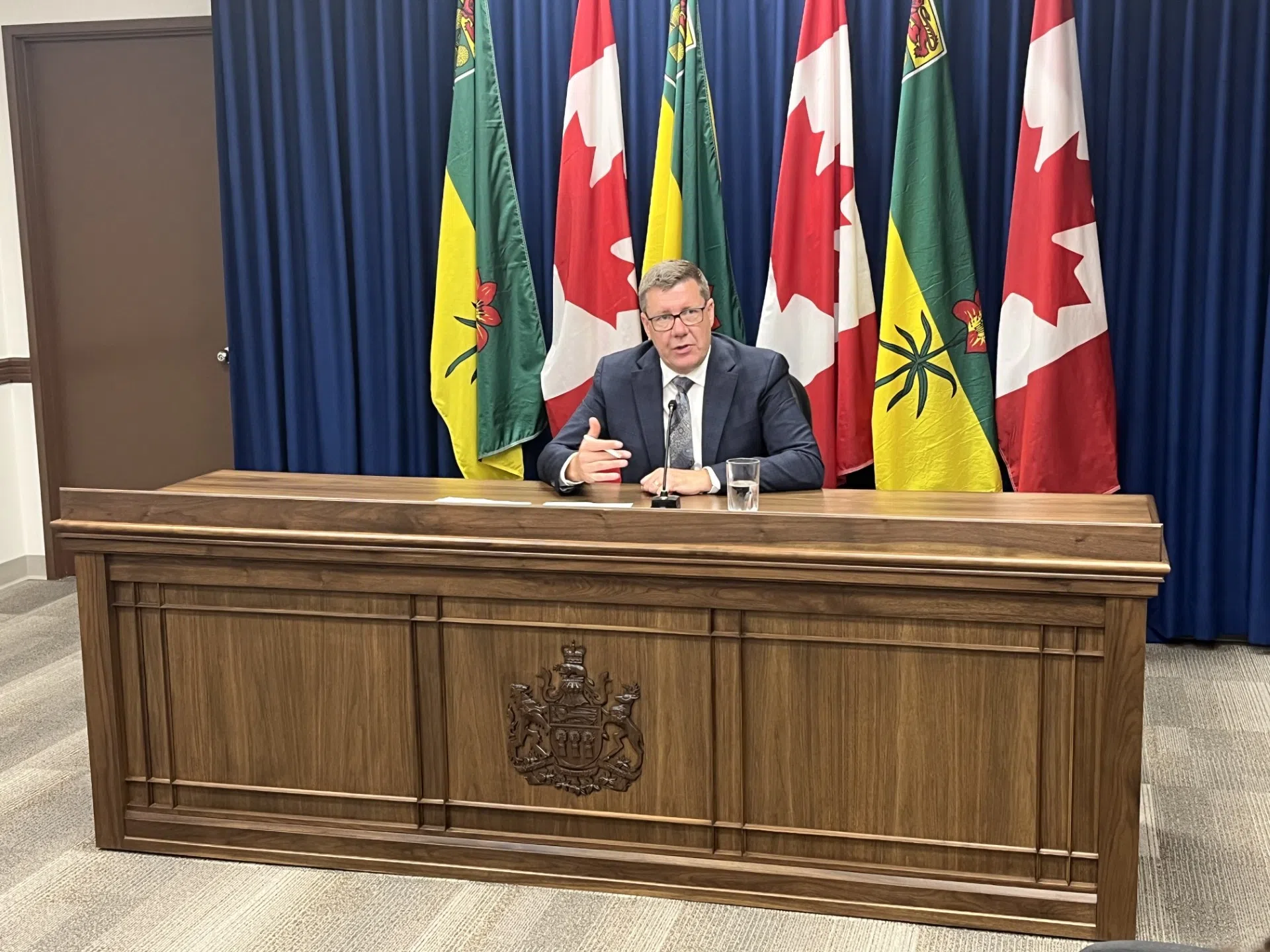
Saskatchewan’s premier hopes to speak with Prime Minister Carney Tuesday following China’s newly announced 75 per cent tariffs on Canadian canola seed.
The move was announced after China’s anti-dumping investigation into canola ruled Canada has been hurting China’s domestic market by getting “preferential policies” and government subsidies. The new tariff, effective Thursday, come on top of 100 per cent Chinese levies on Canadian canola oil and meal announced earlier this year in March.
Premier Scott Moe says he is extremely disappointed in China’s decision, as he thought progress was being made between the two countries on that front.
“I was under the impression, and I feel the federal government and the industry were under the impression, that we were progressing in those discussions with China on the responsive tariffs on canola oil and canola meal. Although we knew the anti-dumping study was happening…I was hopeful that this could have been avoided.”
Although an additional 75 per cent tariff sounds detrimental, Premier Moe says it must be kept in mind that Canadian canola isn’t even out of the ground yet, and producers won’t be significantly impacted until September when a Chinese review of the tariff takes place. However, we will see a canola futures impact effective immediately.
“Right now, on any old crop canola, what we’re seeing on the markets as far as the impact is limit-down, and we’re likely going to see that for the future.” However, he adds that this is a temporary tariff, meaning Canada has a window of opportunity to engage ambitiously, so when a report comes forward, there isn’t a permanent tariff put in place. Moe hopes Carney will offer canola seed producers financial assistance similar to what he promised the forestry sector last week.
“This industry is similar in size, and similar in the jobs that are provided….How do we put our federal government in a position where we can have that conversation with the country of China and the president of China so we can have these tariffs lifted, thus that support wouldn’t be needed, and if that can’t happen in the near term, we are going to be asking for support similar in scope to what we’ve seen in the forestry industry most recently.”
He adds that western Canada needs to be equally protected when it comes to tariffs, especially as the canola industry is larger than the EV, aluminum and steel industries combined.
“We as Canadian also, and our federal government, cannot sacrifice a $43 billion canola industry, 200,000 jobs in that industry that is largely based in western Canada, to protect a fledging electric vehicle industry largely based in eastern Canada.”
Moe has meetings planned with Chinese representatives later this week.