




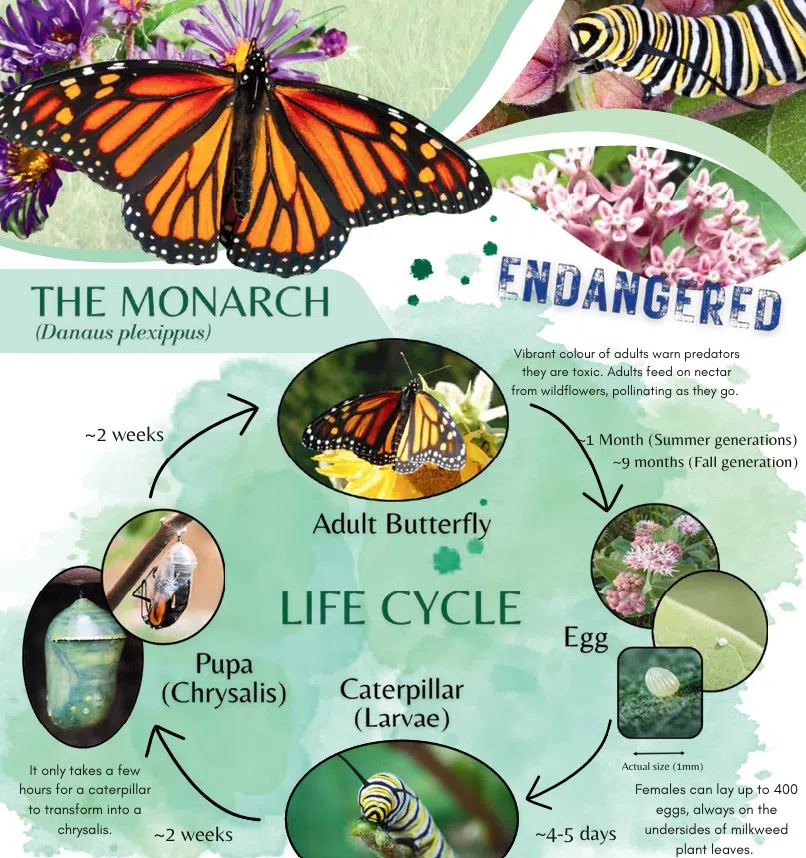
Saskatchewan residents and landowners are encouraged to report sightings of monarch butterflies, who are starting their migration south for the winter at this time of year.
Habitat stewardship coordinator with Nature Saskatchewan, Emily Putz says that monarch butterflies are endangered, the highest at-risk category. She says that monarch caterpillars are milkweed obligates, while the adult butterflies get nutrients from the nectar of native flowers.
The World Wildlife Organization says milkweed is the only plant on which monarchs will lay their eggs and the only source of food for baby caterpillars. But urban planning and agricultural expansion have paved and plowed over millions of acres of milkweed. As well, planting the right species of milkweed in a given area can help both monarch butterflies and other pollinators.
Putz noted that anyone who spots a monarch butterfly is encouraged to report the sighting to the toll-free HOOT-line at +1(800 667-4668).
Monarchs are known for their distinctive orange colour and feed on native flowering species, including smooth aster and blazing stars. Monarch butterflies embark on a mammoth migration travelling between 1,900 and 4,500 kilometres to the mountain forests in central Mexico.
(with files from SwiftCurrentonline.com)