




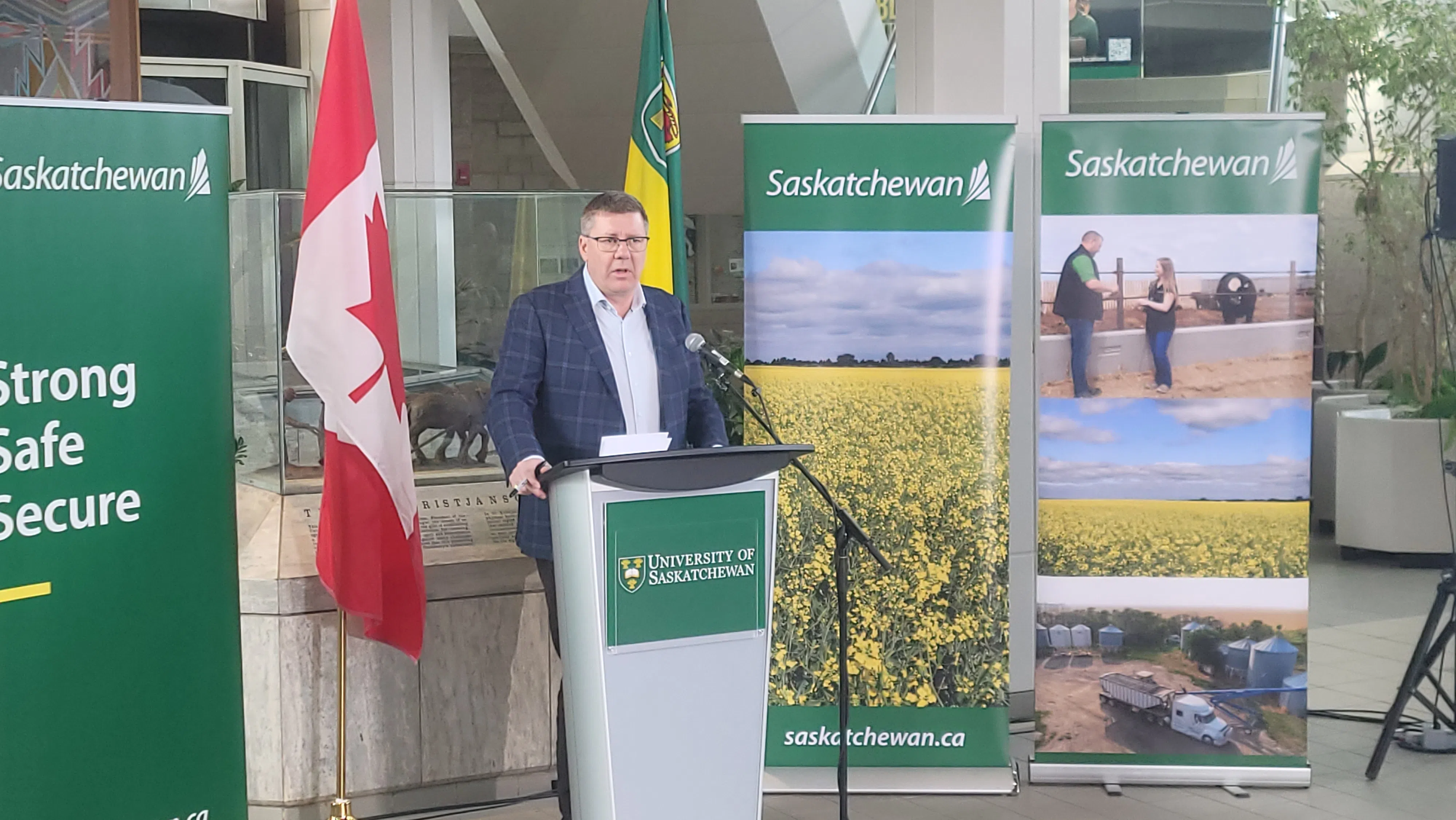
Premier Scott Moe says the trading relationship with China is back to where it was in 2024, prior to tariffs being imposed on Canadian agricultural products.
On Tuesday, Moe returned from China where an agreement was signed last Friday. The agreement will eliminate Chinese tariffs on canola meal and peas, and greatly reduce the canola seed tariff to 15 percent, beginning March 1st. The Chinese market has also reopened to Canadian beef, but canola oil and pork tariffs still remain.
The deal, which was signed during an official visit by Prime Minister Carney, will see Canada import 49,000 Chinese electrical vehicles at a greatly reduced tariff. Moe says Canada got a very good deal in the exchange.
“When you trade that off with a $44 billion canola industry, plus the pulse industry, plus the beef announcements that were made today, plus the opportunities that we have in energy trade into the future, as well as some wood MOU that was signed on forestry products.”
He explains that work by the provincial trade office in China and visits by federal cabinet ministers made all the difference.
“When you show your face in markets like, they most certainly are going to take note of that. Credit to the federal government, and you haven’t heard me saying that a lot on the last decade, but I will say it here today.” Moe also gave credit to Prime Minister Carney for improving trade conditions with China.
The Premier went to China twice, the first time being in September.
“We are in the Chinese marketplace for a reason. It’s one of the largest markets in the world, and they pay more. It’s a premium market, and we’re going to continue to make efforts to access that market.”
Moe says the provincial and federal governments will continue to work with China to improve market access for canola oil and pork, which were not included in last Friday’s agreement. He hopes there can be additional deals involving energy and lumber in the future.