




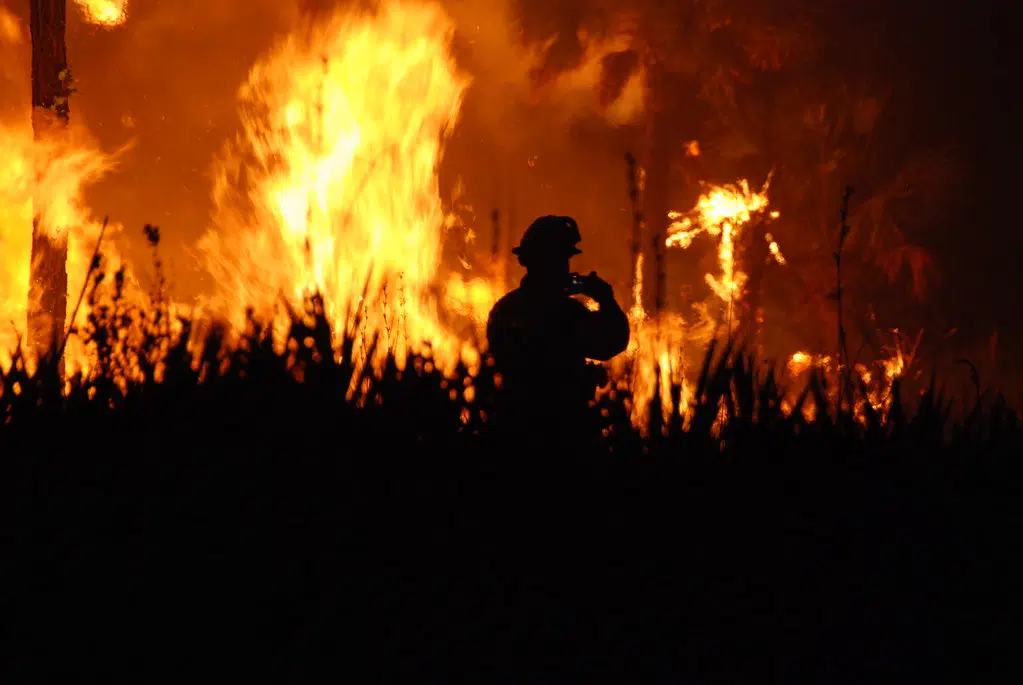
The Saskatchewan Public Safety Agency says it will soon be launching a new tool to aid in value protection during the wildfire season.
Executive Director of Land Operations Bryan Chartrand says he can’t reveal many details yet, but the tool will help locate and protect values-at-risk across Saskatchewan.
He also thanked partners and Quebec and Alaska, which are both providing the provinces firefighting crews with additional resources.
“We have received two CL-415 water bombers from Quebec, and we have received one Q-400 from Alaksa. These aircrafts have been deployed in suppression efforts in the Meadow Lake area and on the Shoe fire.”
He adds that after a week of exhausting their resources, Saskatchewan’s fire crews are finally getting some reprieve.
Chartrand explains that there are currently 11 fires burning in the province, down from 24 last week.
“A week ago, it was getting a little hectic. We had a lot more fires, and they were burning a lot more aggressively. With some of this reprieve, the lower temperatures and some of the rain that we received on the west side, we are able to get them contained, and we are recycling our resources and giving our staff breaks.”
He admits that this will not last forever, as it is early in the season. He expects July will be a busier time. Chartrand says this doesn’t mean the current active wildfires aren’t large or dangerous, in fact they are both. Right now, there are 53 resources on the Camp fire, and 65 resources on the Shoe fire, both of which are burning near Candle Lake.
Those resources include Type 1 and 2 staff, helicopters, air tankers, values protection services, and incident management teams. The Shoe fire is within 25 kilometres of the resort village, and a pre-evacuation statement has been sent out to residents encouraging them to prepare to evacuate.
Chartrand reminds that with the May long weekend approaching, people should be diligent about the activities they take part in.
“Be aware of the fire bans. A PDF and interactive map is available on the Sask. Public Safety.ca website. Prevent wildfires and grassfires. Do not drive on dry grass. Drown any campfires or shore fires until embers are cooled.”