



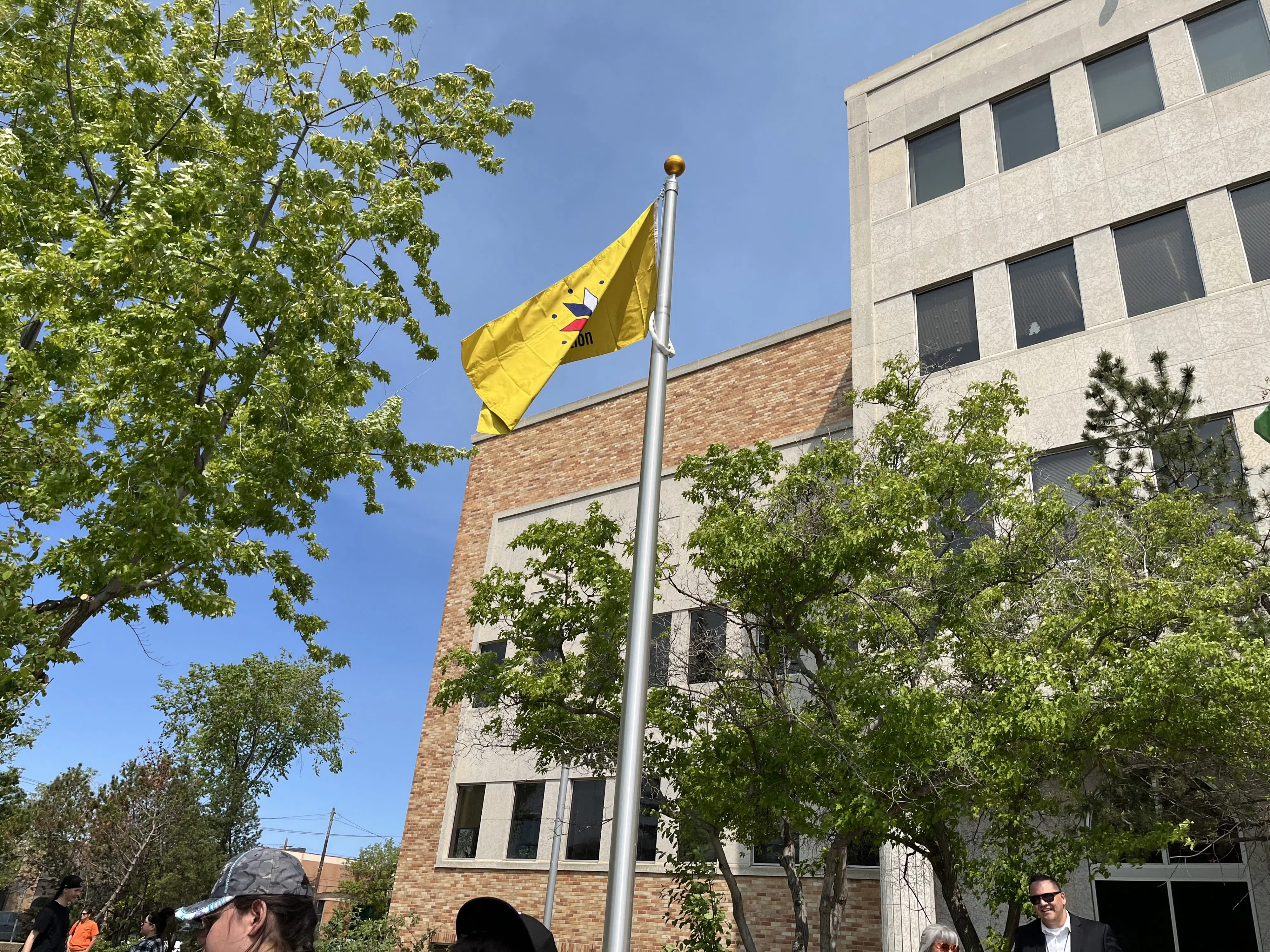
To kick off Indigenous History Month in June, government officials, municipal leaders, Indigenous organizations, residential school survivors and Elders gathered in Saskatoon Civic Square for the raising of the reconciliation flag.
Many of the speakers, including Central Urban Metis Federation Inc. President Shirey Isbister, thanked the crowd for making time to attend but added that more people need to make the event a priority.
“Reconciliation is a term that we continue to use, but it’s not showing up here today as to the amount of people that have come. We need to get everyone out. We need to start getting our families out.”
Police Chief Cam McBride echoed her remarks, as did Saskatoon Tribal Council Tribal Chief Marc Arcand.
“This place should be full every year for talking reconciliation. Everyone should be coming to this place and say ‘I want to be a champion of reconciliation. I just don’t want to send one business representative; I want to send our entire team.’”
The ceremony concluded with the raising of the bright yellow flag of reconciliation, a symbol of commitment to righting historical wrongs and building a better future. Mayor Cynthia Block thinks Saskatoon is on the right path.
“The Saskatoon Homelessness Action Plan is moving forward. It’s a new plan. It’s not lead by the City of Saskatoon exclusively. It’s being led in partnership with SHIP, with the Saskatoon Tribal Council, with CUMFI and the Metis Nation.”
She says that the federal government’s Housing Accelerator Fund program has also committed to adding 757 new affordable housing units in Saskatoon, most of which will offer wrap around supports.
According to the 2022 Point in Time Homelessness Count that took place in Saskatoon, roughly 83 per cent of the 1500 people without a home are Indigenous.